
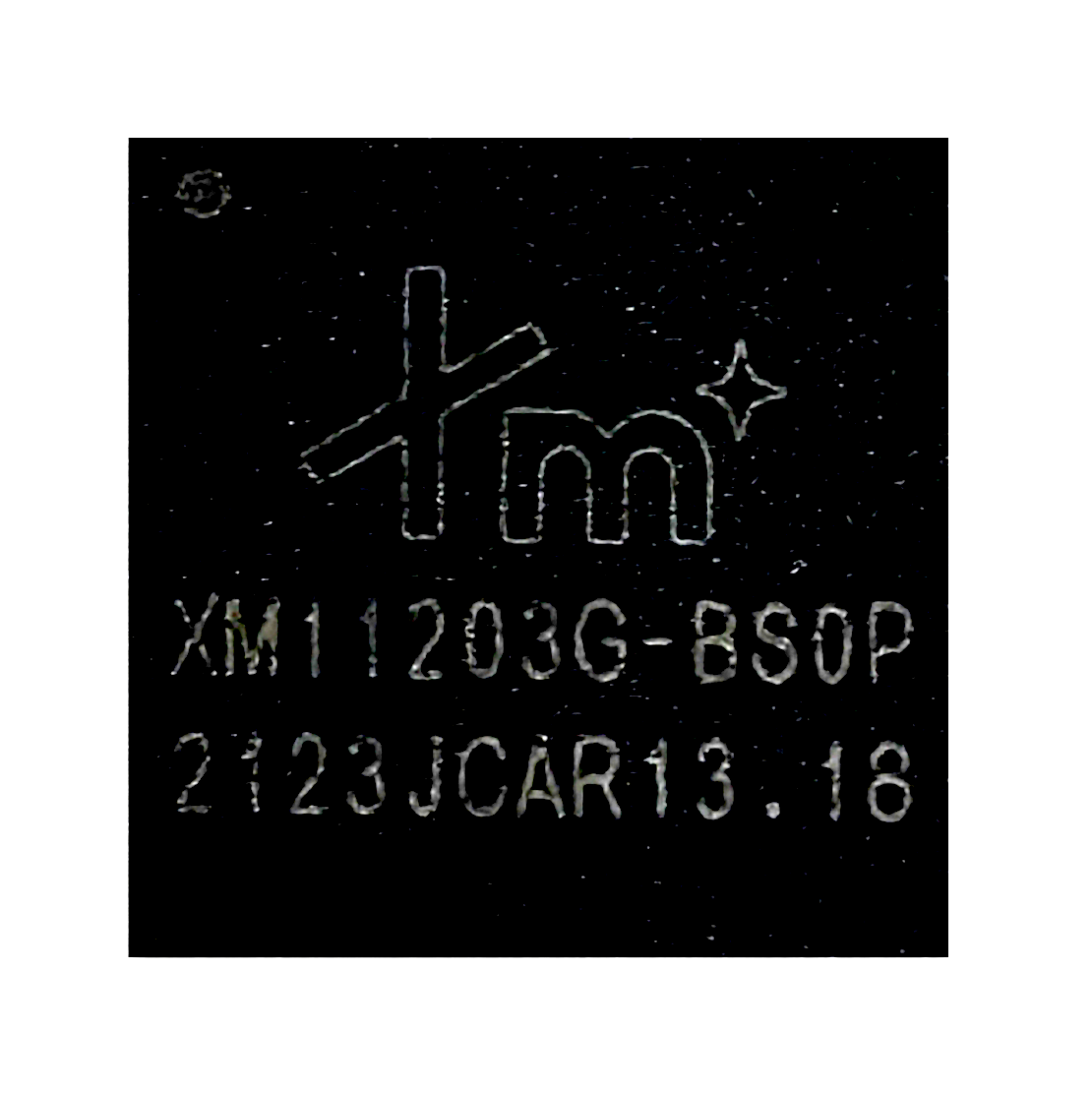
FACT ONE: ONLY ABOUT 20 DRIVER CHIPS CAN BE DENSELY PACKED ONTO A .93 4-IN-1 MIP MODULE; THEREFORE, ACHIEVING A SIMILARLY ROBUST, INDESTRUCTIBLE DRIVE ARCHITECTURE IS CURRENTLY NOT FEASIBLE AT .79.
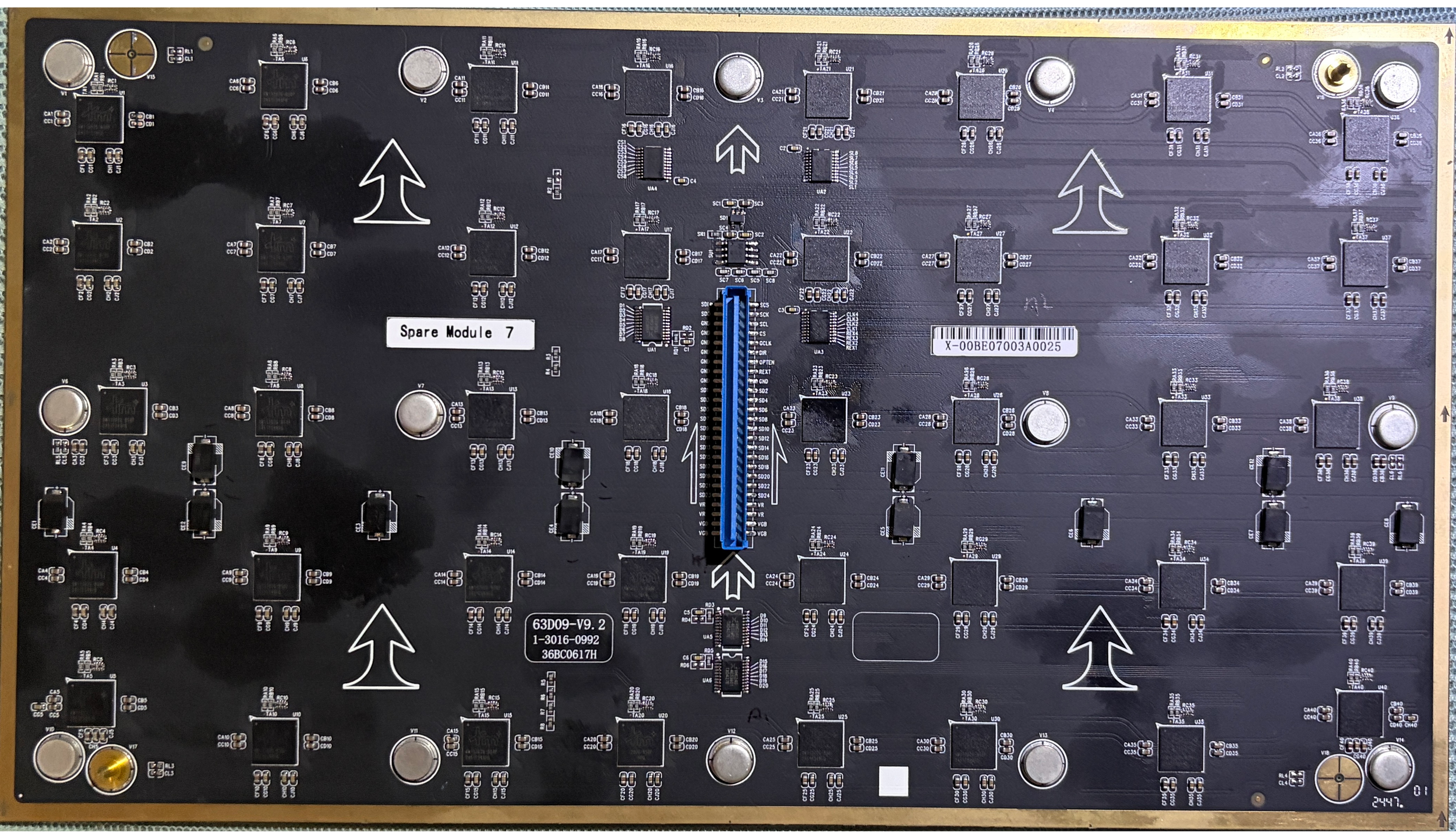
FACT 2: FOR EXISTING XM11202G BACKBOARDS THERE IS AN UPGRADE PATH TO THE SUPERIOR XM11203 -PERFORMED IN CALIFORNIA IN COLLABORATION WITH COLORLIGHT CHINA.
WHITE PAPER
M-Plus driver comparison for cinema low-nit applications
focused on NationStar .93 IMD MIP environments
Executive technical positioning
XM11202G remains the legacy baseline widely deployed in earlier fine-pitch modules.
XM11203G is the optimized evolutionary device specifically suited for low-gray stability within existing high-density ecosystems.
XM11206G is a forward-architecture solution whose advantages are primarily realized in clean-sheet next-generation module designs.
In practical cinema deployments using exposed .93 IMD MIP, XM11203G captures the majority of visually meaningful improvements while preserving full electrical continuity with established backboard designs.
Revised comparative matrix (cinema-weighted)
Parameter | XM11202G | XM11203G | XM11206G
Driver class | Common-cathode | Common-cathode | Common-cathode (next-gen)
Channel count | 120CH + 36 NMOS | 120CH + 36 NMOS | Higher-integration class
Typical scan support | up to 1/36 | up to 1/36 | extended scan envelope
Interface | 3-wire SPI | 3-wire SPI | enhanced high-speed interface
Retrofit to .93 IMD boards | native | true drop-in in most implementations | generally requires new PCB
Low-gray architecture | Gen-1 | Gen-2 cinema-optimized | Gen-2+ theoretical
First-line dark suppression | basic | strongly improved | further improved (platform dependent)
Cross-plate coupling control | baseline | materially enhanced | advanced (requires new ecosystem)
Gradient color temperature | standard | tighter real-world matching | highest potential
Intra-scene contrast stability | good | excellent in low-APL | excellent (diminishing visible gain)
Calibration convergence | good | faster and more predictable | best only with full redesign
High refresh headroom | high | high | highest
System validation risk | very low | low | moderate to high
Deployment maturity | very high | high and field-proven | early adoption
Relative system cost index | 1.00 | ~1.33 | ~2.13 (≈1.6× XM11203)
Cinema low-APL suitability | good | reference-grade | theoretical advantage only in new platforms
Cinema-focused interpretation
XM11202G
Strengths
• mature and widely proven
• electrically stable in commercial environments
• lowest integration barrier
Limitations for modern bat-cave work
• Gen-1 low-gray behavior
• more visible instability below ~3 percent stimulus
• weaker suppression of inter-plate interaction in dense .93 IMD arrays
Best use case
• cost-sensitive installs
• legacy platforms
• non-critical dark-scene environments
XM11203G
Primary strengths
• Gen-2 low-grayscale correction directly addresses the most visible weakness of earlier drivers
• substantially improved first-line settling reduces top-edge artifacts
• enhanced cross-plate isolation is well matched to tight .93 IMD geometries
• tighter per-channel matching improves camera-based calibration convergence
• preserves full electrical and mechanical continuity with XM11202 ecosystems
• avoids costly and time-consuming PCB redesign cycles
Why XM11203G is the cinema sweet spot
In exposed .93 MIP systems, perceived image quality is dominated by low-APL behavior rather than peak output. XM11203G specifically strengthens the sub-3 percent region where premium cinema content is most demanding. When paired with modern calibration and high-bit pipelines, the visible improvement is substantial relative to the architectural change.
Critically, XM11203G delivers these gains while remaining fully compatible with established 40-driver backboard implementations. This preserves manufacturing continuity, shortens deployment cycles, and minimizes validation risk while still achieving reference-grade dark-scene performance.
Best use case
• reference home cinema videowalls
• MEGAMONITOR class systems
• high-end residential bat-cave environments
• performance upgrades where board redesign is undesirable
• madVR-centric playback chains
XM11206G
Technical strengths
• highest architectural ceiling
• expanded timing and control envelope
• strongest theoretical uniformity potential
Practical constraints in NationStar .93 context
• typically requires new backboard design
• longer validation and firmware cycles
• higher total system cost
• diminishing visible benefit when optical platform already provides deep native blacks
• advantages are most fully realized only in clean-sheet module designs
Best use case
• fully new module platforms
• ultra-high refresh commercial walls
• projects already committed to PCB and power redesign
Bottom-line recommendation for cinema low-nit environments
For exposed NationStar .93 4-in-1 IMD MIP systems, XM11203G represents the most rational and performance-efficient driver selection. It delivers the improvements that are actually visible in reference cinema viewing, particularly in the critical low-APL region, while preserving the proven mechanical and electrical ecosystem already in place.
XM11202G remains functional but is no longer optimized for state-of-the-art bat-cave performance. XM11206G offers a higher theoretical ceiling but is most justified only when a full next-generation module redesign is already planned.
In this specific application class, XM11203G occupies the performance-to-risk sweet spot.
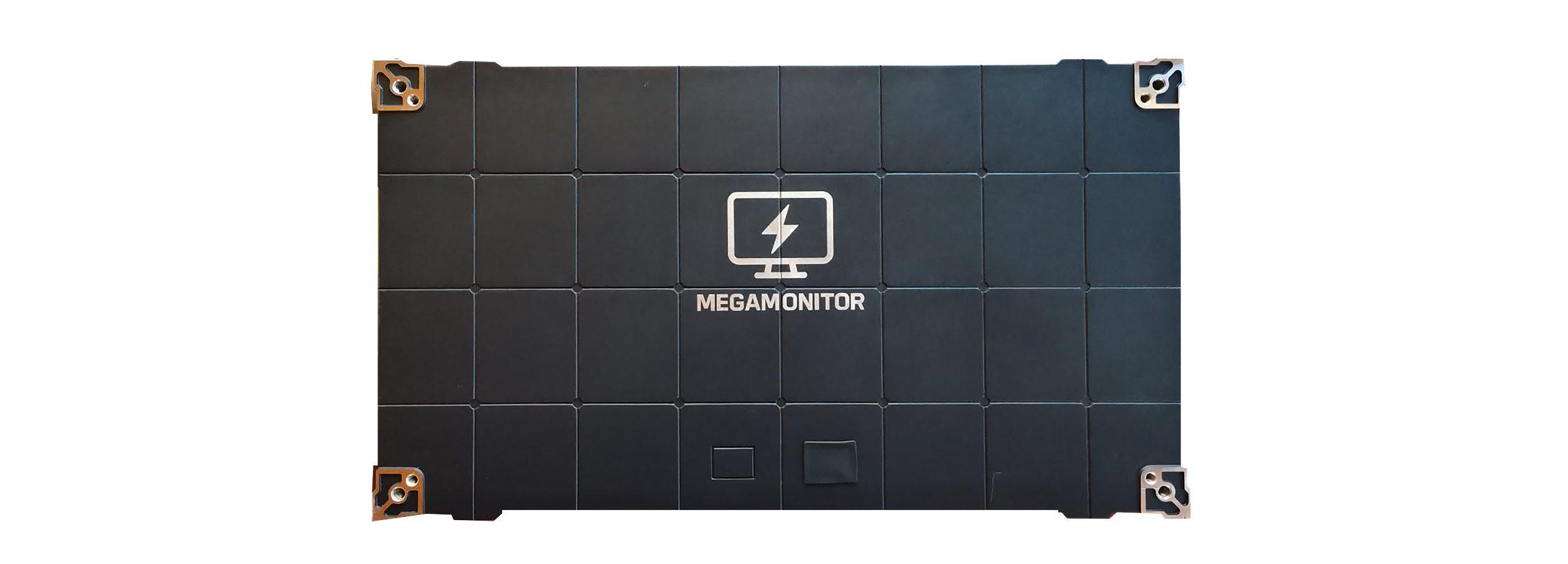
NEW FOR 2026
MEGAMONITOR™ 2026
MEGAMONITOR PIONEERED .93 Woven Screen Look exposed 4-in-1 IMD MIP emitters with XM11203G
240 fps Gaming Priority with Smooth Native 3D Support
Overview
The MEGAMONITOR™ 2026 platform extends the proven XM11203G low-grayscale engine into the high-frame-rate domain by deploying a four-receiver-card architecture engineered primarily for true 240 fps gaming performance. This configuration preserves the cinema-grade shadow fidelity of the .93 IMD MIP optical platform while enabling motion clarity demanded by next-generation gaming systems. Smooth stereoscopic capability is fully supported but remains a secondary benefit rather than the primary design driver.
Where conventional videowalls often require tradeoffs between low-APL fidelity and high refresh operation, the XM11203G implementation is designed to maintain grayscale integrity while scaling bandwidth through parallel receiving paths.
High-frame-rate system architecture
The four-receiver topology distributes pixel load across synchronized processing domains, allowing the wall to operate in the 240 fps class while maintaining the 36-scan electrical structure native to XM11203G.
Core architectural elements
• XM11203G Gen-2 low grayscale engine
• MEGAMONITOR PIONEERED .93 Woven Screen Look exposed 4-in-1 IMD MIP emitters
• four parallel receiving cards
• high-refresh scan timing optimization
• camera-based calibration compatibility
• madVR and HDMI 2.1 ecosystem readiness
This approach avoids immediate migration to next-generation drivers while still targeting motion performance traditionally associated with more disruptive platform changes.
240 fps gaming performance (primary design target)
XM11203G’s improved current settling and cross-plate isolation provide a stable electrical foundation for sustained high frame rate operation. When paired with four receiving cards, the MegaMonitor™ platform is engineered to achieve:
• 240 fps class refresh capability
• reduced motion blur versus typical 120 Hz implementations
• improved sample-and-hold clarity during fast pans
• lower perceived latency in gaming workflows
• stable grayscale tracking during rapid scene transitions
Low-IRE stability is designed to remain intact during high-refresh operation, which is an area where some LED systems begin to show stress. This remains the central performance objective of the MEGAMONITOR™ 2026 architecture.
Smooth native 3D support (secondary benefit)
Although the platform is optimized primarily for 240 fps gaming, the same high-refresh envelope enables clean stereoscopic playback when required. The four-receiver topology provides temporal headroom that supports luminance stability between left and right image streams.
Key 3D attributes
• compatibility with dual 120 fps streams
• high refresh envelope supporting low-crosstalk behavior
• stable low-IRE performance in dark stereoscopic scenes
• synchronized scan timing across receiver domains
• compatibility with advanced madVR conversion pipelines
Because XM11203G strengthens the sub-3 percent region where many LED walls exhibit instability, shadow detail and black-field uniformity are better preserved during demanding stereoscopic material. In practical deployments, however, the dominant demand continues to center on high-frame-rate gaming, with 3D functioning as an additional capability.
Why XM11203G remains the correct foundation
XM-Plus driver comparison for cinema low-nit applications
(focused on NationStar .93 IMD MIP environments)
Executive technical positioning
XM11202G remains the legacy baseline widely deployed in earlier fine-pitch modules.
XM11203G is the optimized evolutionary device specifically suited for low-gray stability within existing high-density ecosystems.
XM11206G is a forward-architecture solution whose advantages are primarily realized in clean-sheet next-generation module designs.
In practical cinema deployments using exposed .93 IMD MIP, XM11203G captures most of the visually meaningful improvements while preserving electrical continuity with established backboard designs.
Revised comparative matrix (cinema-weighted)
Parameter | XM11202G | XM11203G | XM11206G
Driver class | Common-cathode | Common-cathode | Common-cathode (next-gen)
Channel count | 120CH + 36 NMOS | 120CH + 36 NMOS | Higher-integration class
Typical scan support | up to 1/36 | up to 1/36 | extended scan envelope
Interface | 3-wire SPI | 3-wire SPI | enhanced high-speed interface
Retrofit to .93 IMD boards | native | true drop-in in most implementations | generally requires new PCB
Low-gray architecture | Gen-1 | Gen-2 cinema-optimized | Gen-2+ theoretical
First-line dark suppression | basic | strongly improved | further improved (platform dependent)
Cross-plate coupling control | baseline | materially enhanced | advanced (requires new ecosystem)
Gradient color temperature | standard | tighter real-world matching | highest potential
Intra-scene contrast stability | good | excellent in low-APL | excellent (diminishing visible gain)
Calibration convergence | good | faster and more predictable | best only with full redesign
High refresh headroom | high | high | highest
System validation risk | very low | low | moderate to high
Deployment maturity | very high | high and field-proven | early adoption
Relative system cost index | 1.00 | ~1.33 | ~2.13 (≈1.6× XM11203)
Cinema low-APL suitability | good | reference-grade | theoretical advantage only in new platforms
Bottom line
MEGAMONITOR™ 2026 with XM11203G and four-receiver architecture is purpose-built for the performance most demanded in current premium installations: high-frame-rate gaming combined with reference-grade low-nit cinema behavior. The platform delivers the visually meaningful gains associated with newer driver generations while preserving the MEGAMONITOR PIONEERED .93 Woven Screen Look exposed IMD MIP hardware ecosystem and avoiding the cost, risk, and development delays of a full next-generation board redesign.
Within this application class, XM11203G occupies the practical performance-to-risk sweet spot.